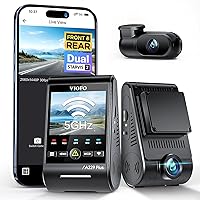
Are All Dash Cams Hardwired?
No, not all dash cams are hard wired. Most come with a 12V socket cable and work as soon as you plug them in. Hardwiring is an optional extra you add when you want parking mode or a cable-free windshield.
On this page (7 sections)
No, not all dash cams are hard wired. The large majority run from the 12V socket in your car, and that is the cable in the box.
Hardwiring is a separate job you choose when you want more than a socket cable gives you.
That matters because the words get mixed up online. People say "hardwired" when they mean "installed neatly", and the two aren't the same thing.
If you're still deciding whether a cam belongs in your car at all, our guide to whether you need a dash cam covers that first. This post deals with the power side only.
What does "hardwired" actually mean for a dash cam?
A hardwired dash cam takes power straight from the car's fuse box instead of the 12V socket. The cable runs behind the trim to a fuse tap, and the cam stays connected whether the engine is running or not.
The socket cable most cams ship with only works while the car is on. Pull the key and the socket goes dead, so the cam stops recording.
A hardwire kit replaces that cable with three leads: a constant battery lead, an ignition-sensing lead and a ground.
That third lead is what makes parking mode possible. The cam can tell the engine is off and switch to a low-power recording state.
If you're new to how these units work, what a dash cam is and how it works sets out the basics before you plan a power upgrade.
Are all dash cams hard wired out of the box?
No. Most dash cams are not hard wired when you unbox them.
The usual contents are the camera, a suction or adhesive mount, and a 12V socket cable long enough to reach the windshield.
Some brands sell a matching hardwire kit as an add-on. ROVE sells its Ultimate Hardwire Kit for its R2-4K and R3 models, and VIOFO makes the HK4 kit for its A329 and A229 lines.
You buy the kit separately when you decide you want parking mode.
That separation is deliberate. A socket install needs no tools and no fuse box knowledge, so the cam can be working in minutes.
Hardwiring asks more of the buyer, so it stays optional.
The socket cable also has to be routed somewhere. Even when you use it, the cable often drapes across the dash or down the A-pillar unless you tuck it in yourself.
The cam itself doesn't care which cable feeds it, so the choice comes down to how much wiring you're willing to hide.
What are the three ways to power a dash cam?
Socket cable, hardwire kit and battery pack are the three main options. Each one fits a different parking setup and a different level of comfort with car electrics.
12V socket cable
This is the simplest path. Plug the cable into the socket, run it to the windshield, and the cam records while you drive.
Nothing else changes in the car, and you can move the cam to another vehicle in seconds.
The trade-off is parking coverage. The socket loses power with the ignition in most cars, so the cam can't watch the car while it sits.
The cable also hangs across the dash unless you tuck it into the trim.
Fuse box hardwire kit
A kit like the ROVE Hardwire Kit connects to the fuse box and hides the cable behind the trim. The cam then gets continuous power, which is what its parking monitor needs.
ROVE's kit includes fuse taps in eight sizes and types, a fuse puller, a volt meter, wire ties, a trim tool and cable clips. It also monitors voltage and cuts power below a set level: 11.8VDC on a 12V battery or 23.6VDC on a 24V system.
A built-in 2A fuse adds a second layer of over-current protection on top of the voltage cut-off.
That voltage cut-off is the key safety feature. It protects the car battery so you can still start the engine after a long park.
You get four settings to choose how early the cam shuts down. ROVE also includes a printed install manual and how-to videos, which help first-timers find a fuse and pull the trim without guesswork.
Dedicated battery pack
A battery pack sits between the car and the cam. It charges while you drive and then powers the cam in parking mode without touching the main battery.
The BlackVue B-130A holds 12.8V / 7,500mAh / 96Wh and BlackVue says it runs up to 30 hours for a single-channel cam. It charges in about 50 minutes hardwired or 90 minutes through a cigarette lighter plug.
It's a bigger spend and it's built for BlackVue cams. For a car that sits for days or weeks, though, it leaves the main battery out of the equation entirely.
The pack uses LiFePO4 cells, has a temperature sensor that pauses charging above 80°C and resumes below 70°C, and includes a 5V USB-A port for a phone or hotspot. Battery and capacitor cams both pair with these power options; our comparison of supercapacitor vs battery dash cams explains why that choice matters less than you'd think.
Which dash cams need a hardwire kit?
Any cam with a parking mode feature needs continuous power to use it. That's the main group, and it covers most mid-range and premium models.
Check the port first. A kit has to match the cam's connector, so a USB-C kit won't fit a cam with a different plug.
The ROVE kit fits R2-4K, R2-4K PRO, R2-4K DUAL, R2-4K DUAL PRO and R3 models with a USB-C port, plus most other cams with a USB-C connector. ROVE notes that the kit targets supercapacitor cams in those model lines and is meant for the 24-hour parking monitor feature.
The VIOFO HK4 uses a Type-C port and fits the A329 series, A229 series, A119Mini2, A139Pro, WM1 and T130. VIOFO says it isn't compatible with other VIOFO series, so match the kit to your model.
The HK4's 13.1 ft cable reaches from the fuse box up to the windshield in most cars, and the kit accepts 12V or 24V vehicles from cars and vans to buses and trucks.
If your cam records only while you drive, a kit adds little. The socket cable already does that job, and the extra wiring only makes sense when parking coverage is the goal.
Can you hardwire a dash cam yourself?
Yes, a fuse tap install is a DIY job for most drivers, though it takes care with the trim. The VIOFO HK4 wiring is a good example of how the leads work.
The red lead goes to a constant power source through a fuse tap. The yellow ACC lead goes to a circuit that only has power when the ignition is on.
The black ground lead goes to bare metal on the car body.
VIOFO lists a 13.1 ft (4m) cable for the HK4. The kit's ACC sensing switches the cam between driving and parking mode as the ignition changes, so no manual toggling is needed.
The ROVE kit works the same way and adds the fuse puller and trim tool you need to lift panels without cracking clips.
If the cam stays in parking mode after you start driving, the ACC lead is likely on a constant circuit. Move it to an ignition-switched fuse.
If the cam keeps recording after shutdown, the reverse is true.
What are the downsides of hardwiring?
The main risks are battery drain and a fiddly cable run. Both are manageable, but you should know about them before you buy a kit.
Battery drain is the one that catches people out. Without low voltage protection, a cam can run a small battery flat over a long park.
Kits with a cut-off setting handle this, so choose one that has it. The ROVE kit protects the battery with four selectable cut-off points.
The VIOFO HK4 offers four cut-off values as well.
Trim work is the other risk. Pushing a cable under a panel is easy on some cars and hard on others with tight headliners or airbag trim.
Take your time, and don't force anything near a side curtain airbag. A trim tool from the kit helps more than fingers alone.
Then there's the car itself. A hardwire install stays with the vehicle, so it's less convenient if you move the cam between cars.
A socket cable takes seconds to swap.
So do you have to hardwire your dash cam?
No. If your cam only needs to record while you drive, the socket cable in the box is enough.
Hardwiring is for drivers who want parking mode or a cable-free windshield, and it's a choice you can make later.
The simplest call: keep the socket cable if parking coverage doesn't matter to you. Add a hardwire kit if you want the cam watching while parked and your car's fuse box is easy to reach.
Go with the ROVE kit for a USB-C cam and a complete set of fuse taps. Pick the VIOFO HK4 if you own one of the VIOFO models it lists.
Choose the BlackVue B-130A if your car sits for long stretches and you'd rather not touch the main battery at all. Note that VIOFO asks you to supply two fuse taps for the bare HK4 cable, so the eight-tap set is the version to buy if you want everything in one box.
Whichever way you go, sort out the camera first. Our guide to 1080p vs 4K dash cams helps you pick a resolution before you spend on power hardware.
Then you'll know the cam is worth hardwiring before the cable goes in.
Frequently asked questions
Can I hardwire any dash cam?
No. The cam needs a hardwire kit that matches its connector and model.
A kit built for a USB-C cam won't fit a cam with a different port, so match the kit to your cam before you start.
Does hardwiring a dash cam void the car warranty?
It shouldn't when the install is done correctly. A fuse tap on an existing circuit leaves the factory wiring alone.
Ask your dealer about the car's warranty terms if you are unsure.
Will a hardwired dash cam drain my car battery?
A kit with low voltage protection cuts power before the battery gets too low. Most kits offer a few cut-off settings, and the cam stops drawing once the set voltage is reached.
How long does a hardwire install take?
Usually about 30 to 60 minutes for a first attempt. The cable run along the trim takes most of the time, and the fuse tap itself is quick once you find the right fuse.
Is hardwiring worth it for a car that sits for weeks?
Not always. A hardwired cam still draws power in parking mode, so a car parked for long stretches is often better served by a dedicated battery pack that leaves the main battery alone.