Dash Cam vs 360 Degree Camera: Which Is Better? (October 2026)
Choose a front and rear dash cam if you mainly want to record the road ahead and behind. For dash cam vs 360 degree camera, choose four channels when views beside your car matter too.
On this page (9 sections)
- Dash cam vs 360 degree camera: what changes?
- Which setup gives more useful footage?
- Does more coverage mean clearer video?
- Who should choose a front and rear dash cam?
- Who should choose a four-channel camera?
- Which camera is easier to install?
- How should you set up and care for a multi-camera dash cam?
- What should you check before choosing?
- Which should you choose?
For dash cam vs 360 degree camera, choose a front and rear setup for those two road views, or four channels when side views matter too. The REDTIGER in this guide records 4K at the front and 1080p at the rear; the IIWEY and ZMOPO add left and right camera views.
“360 degree camera” can describe different layouts. Here, it means a dash cam with channels aimed toward the front, rear and sides, not one camera that creates a complete, unobstructed view around the car.
Our scores weigh channel coverage, resolution, included features and power needs against the purpose of this comparison. Use the camera layout and channel resolution to make the decision, since a bigger camera count does not guarantee more useful footage.

Dash cam vs 360 degree camera: what changes?
A two-channel front and rear dash cam records forward and behind, while a four-channel camera adds views toward the left and right sides. That extra coverage may help document a sideswipe or activity beside the car, but each lens still has a limited view.
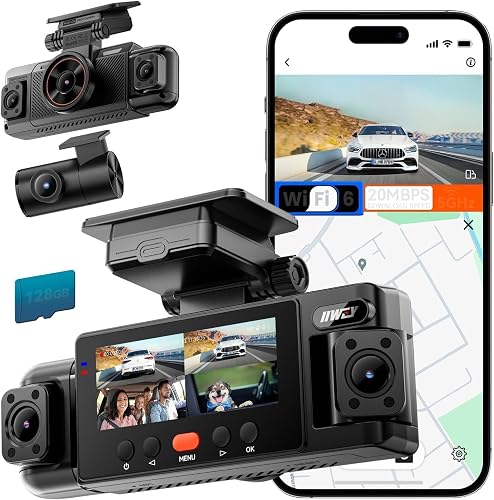
The REDTIGER has a 170 degree front view and a 140 degree rear view. The IIWEY records the front, rear and both sides, with adjustable side cameras; the ZMOPO records front, rear, left and right.
Camera placement, window tint, pillars and other obstructions affect what a lens can capture. A multi-camera setup cannot show an area hidden by the car's body or an incorrectly aimed lens.
What does “360 degree” mean on a dash cam?
On these models, “360 degree” means multiple camera directions, not a single panoramic image of everything around the car. Compare the channel layout and sample clips to see what each lens covers.
The IIWEY records four 1440p channels, with 170 degree front and rear views and 150 degree side views. The ZMOPO uses four 1080p cameras, and its adjustable cameras allow different angles, including interior views.
Camera count and resolution are useful starting points, but they don't show whether a lens will be blocked in your vehicle. Check where each camera can be mounted and whether its angle suits the view you want.
Which setup gives more useful footage?
Choose based on the event you most want documented: two channels cover the road ahead and behind, while four channels add side views. A camera angle that misses the area of concern won't help, even if the system has more channels.
A front camera points toward road hazards and vehicles ahead. If that view matters most, the REDTIGER's 4K front channel and separate 1080p rear camera make it the clearest fit of these three for drivers prioritizing front detail.
Side cameras can help record activity beside the car when an event falls within their view. The IIWEY gives each of its four channels 1440p resolution, while the ZMOPO records four 1080p views.
The ZMOPO's adjustable cameras allow interior footage. If you record inside the cabin, consider passenger privacy and applicable local recording rules.
For a cabin-facing view, compare the camera layout with the options in our 3-channel dash cam guide. A front, cabin and rear arrangement may suit your needs better than side coverage.
Does more coverage mean clearer video?
More cameras do not automatically mean more detail in each view. Compare the resolution and viewing angle for every channel you expect to rely on.
The REDTIGER records 4K at the front and 1080p at the rear. The IIWEY records 1440p on its front, rear and side channels, while the ZMOPO uses four 1080p cameras.
Motion, low light, glare, distance and lens angle can affect visible detail, especially for small objects such as a license plate. No resolution figure guarantees that a plate will be readable in every clip.
Consider the evidence you want to preserve. If you mainly want to record the lane ahead, a higher-resolution front channel may matter more than an extra side view.
Our guide to 1080p vs 4K dash cams explains what resolution can and cannot tell you. Use it alongside channel layout, since a multi-camera system can have a different resolution in each direction.
Who should choose a front and rear dash cam?
A front and rear setup suits drivers who want to record traffic ahead and behind without adding side cameras. It is a practical choice if those two views cover your main concern and you want to keep camera placement simpler.
The REDTIGER fits drivers who prioritize front detail. It records 4K at the front and 1080p at the rear, includes GPS for route and speed information, and comes with a 128GB card.
Skip this layout if you specifically need cameras aimed through the side windows. A front and rear system can't provide dedicated left and right views of an event beside the vehicle.
Who should choose a four-channel camera?
A four-channel system suits drivers who need front, rear and side views, including people who regularly carry passengers or want broader coverage around the vehicle. Check the actual lens positions before buying so the extra cameras can see the areas you care about.
The IIWEY is the stronger match when higher resolution across all four channels is a priority. It records 1440p front, rear and sides, has built-in GPS, and includes a 128GB card.
The ZMOPO suits a buyer who wants four 1080p views and adjustable camera angles, including interior views. Its GPS logger and ACC hardwire kit for parking mode are separate accessories.
Skip four-channel recording if you don't need side views or can't position the cameras where they can see clearly. More cameras also mean more angles to check during setup and more footage to sort through when you need a clip.
Which camera is easier to install?
A front and rear system has fewer views to aim, while a four-channel setup adds side angles to check. Installation also depends on where each camera sits and how its cable reaches a power source.
The REDTIGER has a windshield-mounted front camera and a separate rear camera with a cable. The IIWEY's side cameras are adjustable, and the ZMOPO's adjustable front cameras allow different recording angles.
Before mounting any camera, make sure it won't block your view or interfere with airbags, mirrors or controls. Follow the camera maker's mounting instructions, and plan the cable route before attaching the mount.
Our dash cam mounting guide covers placement considerations. Check camera angles and controls only while safely parked.
Will a 360 dash cam need a hardwire kit?
For these three models, parking mode needs a separately sold hardwire kit. Daily driving can use the included car charger, following each model's power instructions.
The REDTIGER's parking monitoring requires a separate hardwire kit. The IIWEY also needs its hardwire kit for parking modes, and the ZMOPO uses a separate ACC hardwire kit.
Hardwiring adds installation work. Follow the kit and vehicle instructions or use a qualified installer; if you don't need recording while parked, the included car charger is enough for daily driving.
How should you set up and care for a multi-camera dash cam?
A careful first setup helps each camera record the view you bought it for. Start with the camera powered off, place each lens where it has a clear view, then check the recordings while parked before relying on the system.
Remove protective film from any lens before use. Aim side cameras past pillars and trim where possible, and check that rear camera wiring doesn't pull loose when doors or the trunk move.
For the ZMOPO, follow its camera setup instructions and check whether reversing guidelines appear in footage. Its reversing assistance feature can be disabled in the camera settings if you don't need it.
All three include a 128GB card and use loop recording to overwrite older files that aren't locked when storage fills. Save an important clip promptly and review your settings from time to time so an event file isn't lost among routine recordings.
Don't handle the phone or camera while driving. Stop in a safe place before connecting to Wi-Fi, downloading a clip or changing a camera setting.
What should you check before choosing?
Check channel resolution, camera direction, power needs and storage before choosing a dash cam. Those details show whether a 360 degree setup fills a coverage gap for your car.
Confirm that side cameras can see through your windows and won't point into pillars or trim. For cars with unusual window shapes or a large cabin, consider the camera positions before choosing a multi-channel installation.
Check which features are built in and which need an accessory. All three cameras include 128GB cards and need separate hardwire kits for parking mode; the ZMOPO also needs a separate GPS logger for location tracking.
The REDTIGER and IIWEY have built-in GPS, while the ZMOPO's GPS logger is optional. The cameras also offer Wi-Fi apps for viewing or downloading clips, but the ZMOPO's Wi-Fi is for local use in the vehicle and does not provide remote monitoring.
For a broader overview of camera basics, see what a dash cam is and how it works. It can help you weigh recording, storage and power choices before comparing camera layouts.
If you are still deciding whether recording is useful for your situation, read do you need a dash cam?. Drivers who mainly want a front and rear arrangement can also compare mirror dash cams with regular dash cams.
Which should you choose?
For dash cam vs 360 degree camera, pick the REDTIGER if 4K front recording and a rear view are enough; choose four channels if side views are essential. The IIWEY records 1440p across four channels with built-in GPS, while the ZMOPO records four 1080p views and needs a separate GPS logger.
Match the camera layout to the views you need, then confirm that the lenses can be mounted clearly and that you understand the parking power requirements. More directions help when they cover areas your current setup would miss.
For a different multi-camera layout, compare our best 3-channel dash cams.
Frequently asked questions
Is a 360 degree camera better than a dash cam?
A 360 degree dash cam adds side views, while a front and rear system focuses on those two directions. Choose based on the angles you need, the resolution of each channel and whether the cameras can see past your car's trim.
Extra views help only when they cover areas you care about.
Does a 360 degree dash cam record inside the car?
Some four-channel cameras can capture interior footage, but layouts differ. The ZMOPO has adjustable cameras that allow interior views, while the IIWEY has adjustable side cameras.
Check where each lens points in your car, and consider passenger privacy and local audio-recording rules before recording inside the cabin.
Do 360 degree dash cams need extra wiring?
These cameras need vehicle power while recording, and parking mode requires extra wiring. The REDTIGER, IIWEY and ZMOPO each need a separately sold hardwire kit for parking mode.
For daily driving, all three include a car charger, so follow the camera's instructions for connecting power.
Can a 360 degree dash cam read license plates?
A 360 degree layout does not guarantee readable plates in every clip. Distance, motion, lighting, angle and resolution all affect detail.
Compare the resolution of the channel aimed at the road you care about, and don't assume more cameras will make small details clearer.


