Can Dash Cams See Through Window Tint?
Yes, a dash cam can usually see through window tint, but heavy or mirror-style tint dims the picture and can blur detail. The camera sits inside the car filming outward, so a dark film on the windshield cuts the light before it reaches the lens.
On this page (8 sections)
- Can dash cams see through window tint at all?
- Which tint types affect dash cam footage most?
- How does night footage change through tinted glass?
- Does tint on the side and rear windows matter?
- Where should you mount a dash cam on a tinted windshield?
- Do you need a different camera for tinted glass?
- How do you keep parking mode working on a tinted car?
- The short version on tint and dash cams
Yes, a dash cam can usually see through window tint, but heavy or mirror-style tint dims the picture and can blur detail. The camera sits inside the car filming outward, so a dark film on the windshield cuts the light before it reaches the lens.
That matters because most dash cams mount on the glass itself. If you already run a camera, or you're shopping for one, the film between the lens and the road is part of the picture quality question.
Our rundown of what a dash cam is and how it works explains the basics if you're new to them.
Can dash cams see through window tint at all?
Yes, but the result depends on the tint level, not just the camera. A light film with high visible light transmission leaves the view close to normal, while a dark limo tint leaves the lens with much less light to work with.
Dash cams don't see through film the way they see through clean glass. They record whatever light passes through it, so a 70% transmission film keeps most of the brightness and a 5% film leaves very little.
The camera's own exposure control tries to compensate by brightening the image. That raises shadow detail but also adds noise, so a plate that reads clearly with no tint can turn soft and grainy behind dark film.
Our comparison of 1080p vs 4k dash cams covers how resolution and sensor quality change that trade-off.
Which tint types affect dash cam footage most?
Mirror and metallic films cause the most trouble. They reflect some light instead of passing it straight through, which can add glare and odd color casts to the video.
Ceramic tint passes light more cleanly and tends to be the friendlier choice for a camera mounted on the glass. Standard dyed film sits between the two, dimming the scene without the reflective bounce.
Percentage matters as much as type. Film at 70% visible light transmission is barely different to the eye or the lens, while 20% or darker pushes a camera hard, especially at dusk.
Some windshields carry a factory tint band across the top. That band is not usually part of the driver's view, but a camera mounted behind it will record through it.
The Vantrue E1 Lite's HDR mode is aimed at exactly this kind of mixed light. It balances exposure when part of the frame is bright and part is dark, which helps when a tint strip shades the top of the shot while the road stays lit.
Vantrue says the E1 Lite reduces reflections, and that matters with film that bounces light back at the lens. The kit includes electrostatic stickers, so the mount sits on a pad that can be lifted and repositioned.
How does night footage change through tinted glass?
Night is where tint hurts most. The camera is already working with headlights and street lamps, and the film takes away a slice of that light before it reaches the sensor.
A bright daytime plate can survive moderate tint. At night, the same plate lit by headlights may come out dim and soft, especially at the edges of the frame where the lens gathers less light.
Two specs help here. HDR balances bright highlights and dark shadows in the same shot, and a wide aperture like F1.8 or F1.6 lets more light in per second.
The Vantrue E1 Lite is a compact 1080p camera with HDR and an F1.8 aperture, which is the sort of setup that copes better with dim glass. It records at 30fps with a 160-degree lens, so the wide view fills the frame with more of the dark edge where plates sit.
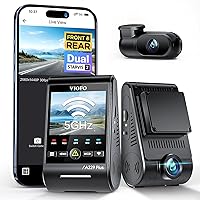
The galphi front cam goes further with a 4K sensor and an F1.6 aperture, so each frame carries more pixels and more light for night work. Its WDR setting does the same balancing job as HDR, and the F1.6 aperture is the wider of the two.
Neither camera removes the tint problem. They just make more of the light that gets through.
A wide aperture helps most in the dimmest scenes, so if your film is dark, the larger opening matters more than raw pixel count.
Does tint on the side and rear windows matter?
Only for cameras that look that way. A front dash cam records through the windshield, so tinted door glass has no effect on its footage.
A rear camera mounted on the back window will look through that window's film, and a cabin camera looking sideways sees the side film. If you run a two-channel setup, each lens faces its own piece of glass.
What about a rear camera behind dark hatch tint?
Rear windows are often tinted darker than the windshield, so rear footage is the first place you'll notice a dim picture. Check the rear image at night before you rely on it for a claim.
If the rear view is unusable, move the rear camera to a cleaner spot on the glass or accept that the front channel does the heavy lifting. Keep the front lens on clear or lightly tinted glass where possible.
A camera without a screen, like the galphi, also keeps the cabin looking tidier when the mount sits near dark glass.
Where should you mount a dash cam on a tinted windshield?
Mount the lens on the cleanest, lightest part of the glass you can reach. A spot a few inches below the top edge and behind the mirror usually avoids the frit band and any tint strip.
Film edges and bubbles scatter light, so keep the lens away from seams. A small camera helps because it sits closer to the glass and blocks less of your view.
The Vantrue E1 Lite measures about 1.73 in wide and 3.27 in tall, which keeps the mount compact on a tinted screen. Many state laws restrict windshield obstructions, so check your local rules and keep the camera low and small.
The E1 Lite can flip the image 180 degrees. That lets you mount it on the dashboard instead of the glass in states that don't allow windshield mounting.
A dashboard mount still looks through the windshield, so the tint is still in the way.
Either way, the mount is held by an adhesive pad on an electrostatic sticker. That means you can lift and reposition the camera if you find the first spot sits over a film edge.
Do you need a different camera for tinted glass?
Not a different kind, but a better one for low light. Look for HDR or WDR, a wide aperture and a sensor that handles dim scenes without washing out.
The galphi has 4K resolution, 5GHz WiFi and a 160-degree lens. More pixels help read a plate that the tint has softened, and the fast WiFi speeds up pulling that clip to your phone.
It also comes with a 32GB card already in the slot, so you can record a test clip the same day you install it. That matters when you want to judge your own tint before a trip.
Both cameras record automatically once they have power, so you don't need a phone connection to capture a drive. The galphi's app connection is only for pulling footage, not for recording itself.
That matters when you're parked and something happens near the car.
Heat is the other factor on a tinted windshield, which gets hot in summer sun. A supercapacitor camera handles heat better than a battery model, and our guide to supercapacitor vs battery dash cams explains why.
How do you keep parking mode working on a tinted car?
Power the camera independently so the car battery isn't at risk. Parking mode draws power while the engine is off, and a dedicated pack avoids draining the vehicle.
The REDTIGER LiFePO4 pack holds 7800mAh and plugs into the cigarette lighter to charge while you drive. It keeps the camera running after you park without any fuse box wiring.
The pack isolates the camera from the car's system, so it never pulls from the vehicle battery once the engine stops.
REDTIGER says a 90-minute drive fully recharges the pack and gives about 24 hours of time-lapse parking protection. It's built for that brand's cameras, so match it to your setup.
The pack also includes velcro tapes, so you can fix it in the glove box or under the seat as REDTIGER recommends.
Check whether your lighter socket stays live with the engine off. REDTIGER advises against this pack in cars where the socket has constant power.
If you haven't committed to a camera yet, our guide to whether you need a dash cam helps you decide before you spend on glass-friendly hardware.
The short version on tint and dash cams
Can dash cams see through window tint? Yes, within limits, and lighter film on the windshield is the safest setup.
Keep the lens on clean, light glass, pick a camera with HDR and a wide aperture, and expect night footage to be the first place tint shows up.
If your film is dark, mount the camera just below any tint strip and test a night clip before a long trip. A small 1080p camera like the Vantrue E1 Lite handles moderate tint well, while the galphi's 4K sensor is the better pick when you want the sharpest plates.
For parking coverage, the REDTIGER pack keeps the camera alive without straining the car battery.
Test the result yourself after a week of driving. Clips from a dark street at night tell you more about your tint than any spec sheet.
Frequently asked questions
Does a dash cam work if only the side windows are tinted?
Yes. A front-facing dash cam records through the windshield, not the door glass.
Tinted side windows only matter for a rear camera or a cabin camera that looks sideways.
Can I mount a dash cam behind a tint strip at the top of the windshield?
You can, but the dotted frit band and any tint strip sit right where many people put the mount. Move the camera a few inches below the band so the lens looks through clean glass.
Does window tint make night footage worse?
Yes. Film blocks light on top of an already dark scene, so headlights and plates get harder to read.
A camera with HDR and a wide aperture holds up better, but no dash cam turns night into day.
Will heat from the sun damage a dash cam on a tinted window?
A windshield gets hot in summer whether or not it has film. A camera with a supercapacitor handles high heat better than one with a battery, which is worth knowing if the car sits outside.
Is it legal to have a dash cam on a tinted windshield?
Laws on windshield obstruction vary by state. Check your local rules and keep the camera small and low on the glass, away from the driver's direct line of sight.