9 Best Dash Cams for Night Vision (October 2026)
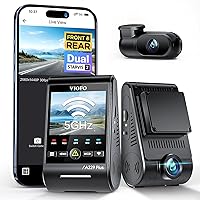
The best dash cams for night driving include the ROVE R2-4K Dual for daily night commutes, the REDTIGER 4K Front and Rear Dash Cam for touchscreen drivers, and the VIOFO A229 Pro for detailed rear views.
On this page (3 sections)
The best dash cam for night vision for most drivers is the ROVE R2-4K Dual, which combines a STARVIS 2 front sensor and HDR with a rear camera. Choose the VIOFO A229 Pro for low-light features on both cameras, or the Vantrue N2X to record the cabin as well as the road.
Night footage depends on more than a resolution label. Sensor, aperture, HDR or WDR, headlights, weather, windshield reflections, and camera position all affect the detail captured.
Start by deciding which direction you need to record. A front-and-rear setup suits ordinary traffic coverage, while cabin and four-channel models address rideshare, fleet, and side-view needs.
Our everyday dash cam picks cover broader use, and the best 2K dash cams help compare resolution options.
Our picks at a glance
-
1

-
2

-
3

Which dash cams help with night driving?
The ROVE R2-4K Dual is the strongest fit for a typical night commute because it pairs a low-light front sensor and HDR with a rear camera. The VIOFO A229 Pro is the more fitting choice if night detail from both front and rear cameras matters.
We compared camera layouts, stated low-light features, included accessories, and parking-mode requirements against common night-driving needs. The picks below serve different priorities, so weigh the camera views and setup work alongside resolution.
| Product | Best for | Coverage | Front and rear resolution | Low-light features | Our score |
|---|---|---|---|---|---|
| ROVE R2-4K Dual | daily night commutes | Front and rear | 2.5K upscaled to 4K front, 1080P rear | STARVIS 2 front sensor and HDR | 9.1 |
| REDTIGER 4K Front and Rear Dash Cam | touchscreen drivers | Front and rear | 4K front, 1080P rear | WDR, HDR, and STARVIS 2 | 8.9 |
| VIOFO A229 Pro | detailed rear views | Front and rear | 4K front, 2K rear | Dual STARVIS 2 sensors and HDR | 8.8 |
| Vantrue N2X | rideshare interiors | Front and cabin | Dual HDR and cabin IR lights | 8.1 | |
| IIWEY N6 360 Dash Cam | side coverage | Front, rear, and both sides | Infrared night vision | 8.0 | |
| TERUNSOUL 4K 3-Channel Dash Cam | cabin and road | Front, rear, and cabin | WDR, HD night vision, and cabin IR lights | 7.9 | |
| Aputeta 4K+4K Dual Dash Cam | dual 4K detail | Front and rear | 4K front and rear | F1.5 aperture and WDR | 7.8 |
| 70mai A810 Lite | discreet placement | Front and rear | 4K front, 1080P rear | HDR and F1.55 aperture | 7.8 |
| TERUNSOUL 4K+4K Dual Dash Cam | front and rear 4K | Front and rear | 4K front and rear | AProX HD night vision and large apertures | 7.2 |
ROVE R2-4K Dual: Best for daily night commutes
- STARVIS 2 IMX675 front sensor
- HDR
- 2.5K front video upscaled to 4K
- 1080P rear video
The STARVIS 2 front sensor and HDR are aimed at low-light recording, with a rear camera for coverage behind the car. The front video is 2.5K upscaled to 4K.
Pros
- STARVIS 2 front sensor
- HDR
- 128GB card included
Cons
- Front video is upscaled, not native 4K
- Parking mode needs a separate hardwire kit
The ROVE R2-4K Dual suits drivers who want front and rear recording with specific low-light support on the front camera. Its Sony STARVIS 2 IMX675 sensor works with HDR to handle dim roads and changing light.
The front camera records at 2.5K and upscales the video to 4K. Rear recording is 1080P, so this is a practical front-first choice rather than the pick for equal high resolution from both ends.
A 128GB microSD card comes in the box. GPS records route and speed data, and Wi-Fi plus the ROVE app let you review clips on a phone.
For parked-car recording, ROVE offers time-lapse, motion-detection, and collision-detection modes. A separate hardwire kit is required for parking mode, so include that wiring in your plan if you park overnight and want the camera active.
REDTIGER 4K Front and Rear Dash Cam: Best for touchscreen drivers
- STARVIS 2 sensor
- WDR and HDR
- 4K front and 1080P rear
- Touch screen and voice commands
WDR, HDR, and a STARVIS 2 sensor support low-light recording. Touch controls and voice commands offer different ways to manage the camera.
Pros
- 4K front and 1080P rear recording
- WDR and HDR
- 128GB card included
Cons
- Maximum supported card size is listed as 64GB
- Parking monitoring needs a separate hardwire kit
The REDTIGER 4K Front and Rear Dash Cam fits drivers who want touchscreen controls as well as several low-light features. STARVIS 2, WDR, and HDR are paired with 4K front and 1080P rear recording.
A touchscreen can make it easier to reach common controls while parked, and voice commands give you another way to manage the camera. Avoid changing settings while driving; set up the features before a trip.
It includes a 128GB card, but the stated maximum supported card size is 64GB. That conflict makes replacement-card compatibility unclear, so confirm the supported capacity before buying another card rather than assuming a larger one will work.
Parking monitoring has G-sensor and time-lapse modes and requires a separate hardwire kit. Pick this model if touch and voice controls matter to you, and skip it if you want a clear, consistent answer about larger card support.
VIOFO A229 Pro: Best for detailed rear views
- 4K front and 2K rear
- STARVIS 2 sensors front and rear
- HDR for front and rear
- CPL filter included
Dual STARVIS 2 sensors and HDR cover both front and rear recording. Its 2K rear camera offers more resolution than the 1080P rear cameras in several other picks.
Pros
- Dual STARVIS 2 sensors
- HDR on front and rear
- CPL filter included
Cons
- Memory card is not included
- Parking mode needs a separate hardwire kit
The VIOFO A229 Pro is the clearest choice for drivers who want low-light features on both front and rear cameras. It records 4K in front and 2K behind, using dual STARVIS 2 sensors and HDR on both views.
An included CPL filter is fitted to the front lens to reduce reflections and glare from glass and road surfaces. This is useful if reflections are a regular distraction in your recordings, though it doesn't replace a clean windshield or careful camera placement.
No memory card is included. It accepts cards up to 512GB, so choose a compatible card before installation and format it as the camera instructions require.
The three parking modes are event detection, low bitrate, and time lapse. A separate HK4 Acc hardwire kit is not included.
Choose the VIOFO when rear detail is a priority; skip it if you want a ready-to-record kit with a memory card in the box.
Vantrue N2X: Best for rideshare interiors

- STARVIS 2 sensor
- Dual HDR
- Front and cabin views
- 4 IR lights for the cabin camera
The front and cabin cameras suit rideshare drivers who want to record inside the car as well as the road. Four IR lights support cabin recording in darkness.
Pros
- STARVIS 2 sensor
- Front and cabin recording
- Cabin camera can be turned off
Cons
- No rear-facing exterior camera
- Parking mode needs a separate hardwire kit
The Vantrue N2X suits rideshare and taxi drivers who need a view of the road and cabin rather than the road behind the car. The front camera records 1944P, and the cabin camera records 1080P.
Four IR lights support cabin recording in darkness. The interior lens rotates 45 degrees, and you can turn off its video and audio when you don't need to record inside.
This camera does not have a rear-facing exterior camera. If rear traffic is your main concern, choose a front-and-rear model instead; if passenger activity matters, the cabin view is more relevant than a rear windshield view.
Parking modes include motion or collision detection, plus low-frame-rate and low-bitrate recording. A separate hardwire kit is required.
The magnetic mount supports tool-free installation and quick dismounting, a useful fit for drivers who move the camera between vehicles.
IIWEY N6 360 Dash Cam: Best for side coverage
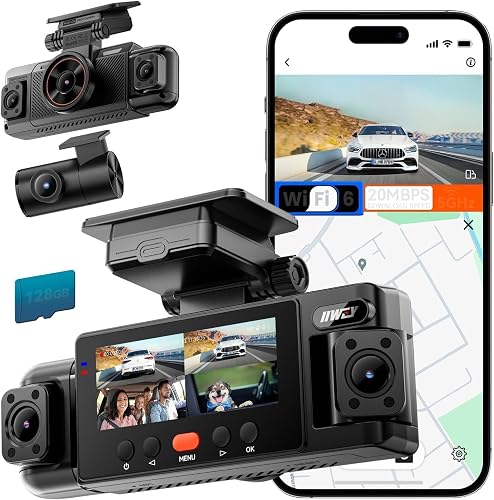
- Four-channel recording
- STARVIS 2K video
- Infrared night vision
- Adjustable side cameras
Four cameras record the front, rear, and both sides, with infrared night vision. This wider coverage suits drivers who need views around the vehicle.
Pros
- Four-channel coverage
- Adjustable side cameras
- 128GB card included
Cons
- Requires vehicle power while in use
- Parking mode needs a separate hardwire kit
The IIWEY N6 is for drivers who need views around the vehicle, including both sides. Its four cameras record the front, rear, and sides in STARVIS 2K video, and the side cameras can be adjusted.
Infrared night vision supports recording in low light across a broad layout. A 128GB card is included, and the camera supports cards up to 256GB.
The N6 must be connected to vehicle power while in use and has no built-in battery. Parking options include time lapse and impact detection, but parking mode needs a separate hardwire kit.
Choose this system for side coverage that a basic dual-camera setup cannot provide. Skip it if you only need road footage from the front, since four camera positions and their wiring add installation and review work.
TERUNSOUL 4K 3-Channel Dash Cam: Best for cabin and road

- 4K front and rear
- 1080P cabin camera
- WDR and HD night vision
- Four cabin IR lights
A third cabin camera adds interior coverage to 4K front and rear recording. The cabin camera has four IR lights for recording in darkness.
Pros
- 4K front and rear
- Cabin camera with IR lights
- 128GB card included
Cons
- Parking mode needs a separate hardwire kit
- Three camera views may be more than a front-only driver needs
The TERUNSOUL 4K 3-Channel Dash Cam is suited to drivers who want exterior front and rear views plus a cabin recording. Both road cameras record in 4K, while the cabin view records in 1080P.
Four IR lights support the cabin camera in darkness. WDR and AProX HD night vision are also included, as are GPS and a 128GB card.
This layout can suit rideshare drivers who need both passenger and rear-road views. The Vantrue N2X is a simpler front-and-cabin alternative, but it leaves the road behind uncovered.
Parking mode offers time-lapse and collision detection and requires a separate hardwire kit. Plan the positions of all three cameras before routing cables, and skip this model if you don't need the interior view.
Aputeta 4K+4K Dual Dash Cam: Best for dual 4K detail

- 4K front and rear
- F1.5 aperture
- WDR
- Time-lapse parking mode
Both cameras record in 4K, with an F1.5 front aperture and WDR. The combination may suit drivers who want high-resolution front and rear footage.
Pros
- 4K front and rear
- F1.5 front aperture
- 128GB card included
Cons
- Parking mode needs a separate hardwire kit
- Low-light performance can vary with road and weather conditions
The Aputeta 4K+4K Dual Dash Cam suits drivers who want 4K recording from both ends and an included memory card. The front lens has an F1.5 aperture, and WDR is included for low-light use.
A 128GB card is included, with support for cards up to 512GB. GPS, loop recording, collision sensing, and emergency video lock round out the day-to-day setup.
Time-lapse parking mode locks a one-minute clip when an event occurs, but it requires a separate hardwiring kit. Choose it if dual 4K recording is the priority; skip it if you want a more specifically described low-light sensor setup, such as the dual STARVIS 2 approach in the VIOFO.
70mai A810 Lite: Best for discreet placement

- 4K front and 1080P rear
- HDR night vision
- F1.55 aperture
- Compact design
HDR and an F1.55 aperture are aimed at low-light recording, while the compact design can fit behind a rearview mirror. It includes a 64GB card.
Pros
- HDR and F1.55 aperture
- Compact design
- Supercapacitor
Cons
- 64GB card included
- Parking mode needs a separate hardwire kit
The 70mai A810 Lite is a good fit when a discreet front camera matters alongside night recording. Its compact shape can fit behind the rearview mirror, and the system records 4K in front and 1080P behind.
HDR night vision and an F1.55 aperture support its low-light focus. It includes a 64GB card, and a supercapacitor replaces a battery.
Built-in GPS and Wi-Fi 6 support app-based preview and transfer. Voice control offers hands-free commands, but set the camera up before driving so you aren't adjusting options on the road.
Parking mode supports impact detection and time lapse, with a compatible hardwire kit required. Pick it for compact placement and front resolution; skip it if a larger included memory card is a key buying condition.
TERUNSOUL 4K+4K Dual Dash Cam: Best for front and rear 4K

- 4K front and rear
- F1.5 front and F1.8 rear apertures
- AProX HD night vision
- 128GB card included
The front and rear cameras record in 4K, with F1.5 and F1.8 apertures respectively. It also includes a 128GB card.
Pros
- 4K front and rear
- F1.5 front and F1.8 rear apertures
- 128GB card included
Cons
- Parking mode needs a separate hardwire kit
- The feature set overlaps with other dual 4K options
The TERUNSOUL 4K+4K Dual Dash Cam is for drivers who want 4K from the front and rear cameras and a 128GB card included. Its front aperture is F1.5, and its rear aperture is F1.8.
AProX HD night vision, GPS, and Wi-Fi are included. Its setup overlaps with the Aputeta dual-4K option, so focus your comparison on the camera features and kit details that matter most to you.
Parking mode supports time-lapse and collision detection, with a separate hardwire kit required. Choose this camera when dual 4K and the stated aperture details are central to your decision; skip it if you would rather pay attention to a clearer differentiator, such as dual STARVIS 2 sensors or a cabin view.
How do you choose a dash cam for night vision?
Choose a night-driving dash cam by matching low-light features to the camera views you need. Compare the front and rear cameras separately, then check memory, controls, parking power, and installation before deciding.
A sensor described for the front camera doesn't prove that the rear camera uses the same sensor. Likewise, a cabin IR light helps with interior footage, not with reading a vehicle behind you.
Keep each camera's role clear as you compare the products.
Does 4K make the best dash cam for night vision?
4K describes resolution, not how well a camera handles darkness or glare. HDR or WDR, a low-light sensor, and lens aperture are other useful details to compare.
Check the rear camera separately if evidence from behind matters. The ROVE's front video is upscaled from 2.5K, while the VIOFO records 4K front and 2K rear; these are different tradeoffs in resolution and sensor coverage.
A higher-resolution file may show more detail in favorable conditions, but poor light, glare, a dirty windshield, or motion can still make a plate hard to read. Match your expectations to both the recording resolution and the light-management features.
How do HDR, WDR, and aperture affect night footage?
HDR and WDR are designed to balance bright and dark areas in a scene. That can help when headlights and an unlit road appear together, though it cannot remove every reflection or restore detail that the camera never captured.
Aperture describes how much light can pass through the lens. A larger aperture can support low-light capture, but it isn't a guarantee of clear footage in every road, weather, or lighting condition.
Look at which camera gets the feature. The VIOFO specifies HDR and STARVIS 2 sensors for both front and rear views, while other models focus their named sensor or infrared features on a particular view.
Should you choose front-and-rear or cabin recording?
A front-and-rear camera records the road in both directions. A front-and-cabin camera records the road and the people inside, making it a better match for rideshare or taxi work where the interior view is useful.
If you need both the exterior rear view and a cabin recording, consider a three-channel setup. The best 3-channel dash cams offer more options for combining those views.
Four-channel systems add side views, which may help a driver who needs coverage around the vehicle. They also involve more camera positions to mount and more footage to review, so don't add channels without a reason.
What should you check before installing a night dash cam?
Check the camera's intended power connection, memory-card requirements, and the cable route before mounting it. Several picks include a card, but the VIOFO does not, and the REDTIGER's stated maximum card size conflicts with its included card size.
Mount the front camera high on the windshield without blocking your view of the road. Keep the lens level and aim it through a clean section of glass.
Route cables away from airbags, moving parts, and the driver's controls, following the vehicle and camera instructions.
For a rear camera, plan a cable path that reaches the back window without pulling tight or crossing a place where passengers or cargo can snag it. Three- and four-camera systems need a plan for every camera before you attach the mounts.
After setup, check a short daytime clip and a night clip from each camera. Confirm that the view includes the road or cabin area you intended, and that date, time, and GPS options are set the way you want.
How can you keep night footage useful?
Keep the windshield and camera lens clean, especially in the area directly in front of the lens. Dust, smears, and reflections can soften a night recording or add bright streaks around lights.
Check the camera angle after windshield cleaning, mount adjustments, or seasonal changes to the vehicle. A camera pointed too high can record too much sky, while one pointed too low can miss distant road detail.
Use loop recording and event locks as intended, then review important clips promptly. If a collision or other event occurs, save the clip to another device so it is not left solely on the camera's card.
Format the memory card in the camera according to its instructions, and replace it with a compatible card if recording errors appear. For step-by-step card care, see our guide to formatting a dash cam SD card.
What common night-camera buying mistakes should you avoid?
Don't choose by resolution alone. A 4K label doesn't tell you whether the rear camera has a low-light sensor, whether HDR applies to both views, or whether the camera is designed to record a cabin.
Don't mistake cabin infrared recording for road illumination. IR lights support the interior camera in darkness, while road-facing cameras rely on the scene's available light and their own low-light features.
Don't assume parking mode is ready as soon as you open the box. The parking modes described here require a separate hardwire kit, so check the kit and installation requirements before you count on overnight recording.
Finally, don't overlook storage and power details. The VIOFO needs a separately purchased card, the REDTIGER's card-capacity information needs clarification, and the IIWEY N6 needs vehicle power whenever it's in use.
Does night vision work while your car is parked?
Night vision describes low-light recording, while parking mode describes how a camera records when the ignition is off. The parking modes on these picks require a separate hardwire kit.
If overnight recording is a priority, compare the parking modes, wiring needs, and power setup before buying. Our dash cam battery pack guide explains another way to supply power for parking mode.
Which night vision dash cam should you choose?
Choose the ROVE R2-4K Dual for everyday front and rear coverage with a STARVIS 2 front sensor and HDR. Pick the VIOFO A229 Pro when low-light features on both cameras matter, or the Vantrue N2X when a night-time cabin view matters more than exterior rear coverage.
Choose the TERUNSOUL 3-channel for road and cabin views, or the IIWEY N6 if you need both side views too. For dual 4K recording, compare the Aputeta and TERUNSOUL options against the VIOFO's dual sensors and the amount of storage each kit includes.
Before you buy, decide which view you need, check the memory and power requirements, and plan the camera and cable positions. If your priority is the best dash cam for night vision, select the setup whose low-light features apply to the cameras you will actually rely on, then browse our everyday dash cam picks if you want to compare broader features.
Sources
- ROVE R2-4K Dual{rel="sponsored nofollow"}
- REDTIGER F7N Touch{rel="sponsored nofollow"}
- VIOFO A229 Pro{rel="sponsored nofollow"}
- Vantrue N2X{rel="sponsored nofollow"}
- IIWEY N6{rel="sponsored nofollow"}
- TERUNSOUL 3-channel dash cam{rel="sponsored nofollow"}
- Aputeta dual dash cam{rel="sponsored nofollow"}
- 70mai A810 Lite{rel="sponsored nofollow"}
- TERUNSOUL dual dash cam{rel="sponsored nofollow"}
Our top 3 picks at a glance
-
1
-
2
-
3
Frequently asked questions
What matters most in a night vision dash cam?
Compare the sensor, lens aperture, and HDR or WDR features for each camera. Also decide whether you need a front view, a rear exterior view, or a cabin view, since low-light features on one camera don't automatically apply to the others.
Glare, weather, movement, and placement affect the final footage.
Is 4K better than 2K for night driving?
Higher resolution can capture more image detail, but it doesn't guarantee clearer footage in darkness. Sensor design, lens aperture, HDR or WDR, exposure, and available light also affect what a camera records.
Compare rear-camera resolution and night features separately.
Do I need a rear camera for night driving?
A rear camera records traffic and events behind your vehicle, while a front-only camera covers the road ahead. Choose based on whether you want evidence from both directions and are comfortable routing a cable to the rear.
For three views, compare 3-channel dash cams.
Can a dash cam record inside the car at night?
Yes. Some front-and-cabin cameras use infrared lights to record the interior in low light or darkness.
A cabin camera can suit rideshare or taxi work, but it doesn't replace a rear-facing exterior camera.
Check whether you can turn off interior video and audio when you don't need them.
Does parking mode work without a hardwire kit?
The parking modes described for these picks require a separate hardwire kit. It lets the camera draw power while the ignition is off, but installation and vehicle compatibility vary.
Read the camera and hardwire kit instructions before connecting it to your car.